Thu 10 Jul 2025
Bloody repression in Togo: Brigitte Ameganvi denounces impunity and calls for an international investigation
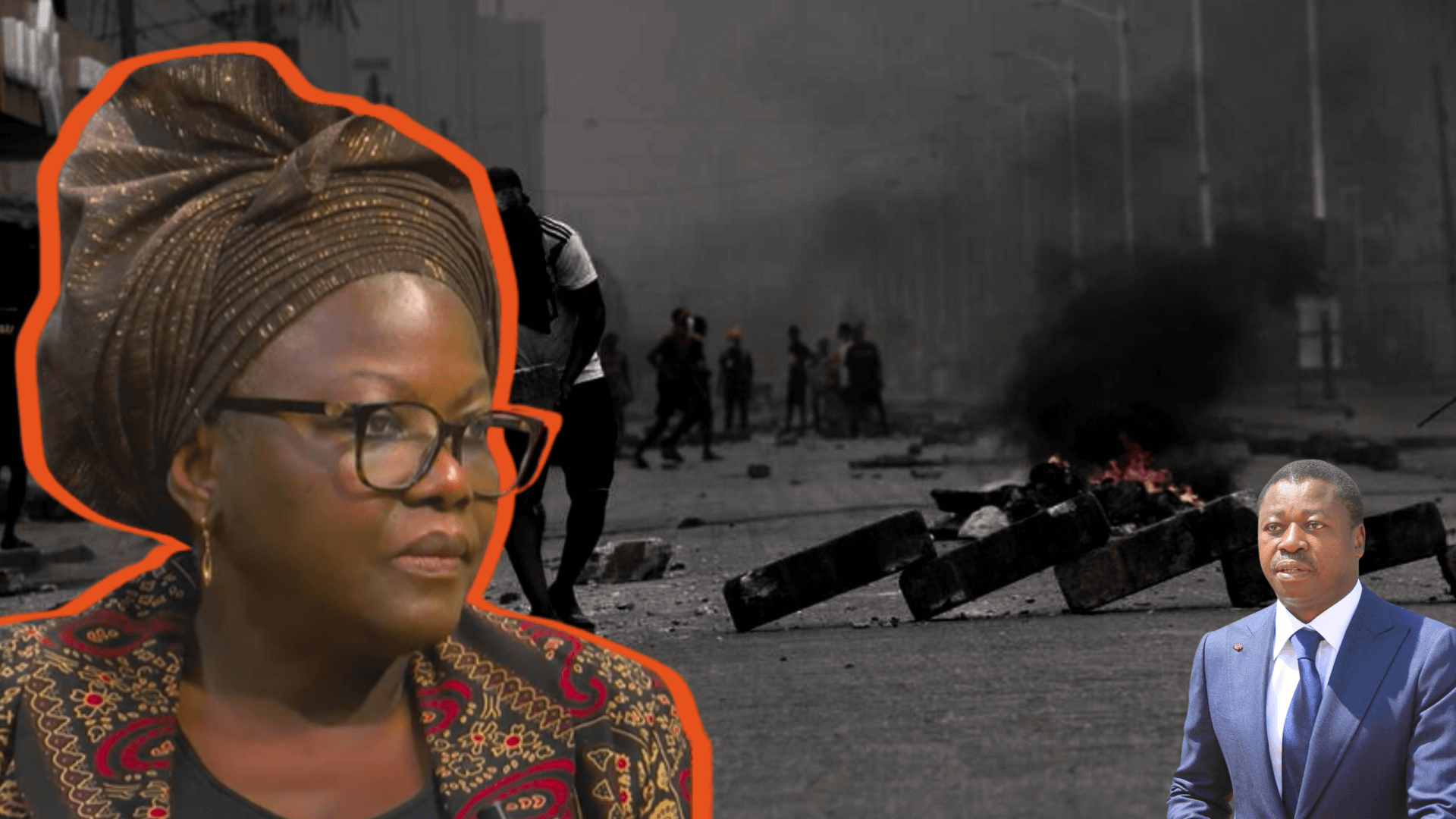
From June 26 to 28, 2025, massive protests against poor governance, injustice, and the recent constitutional reform were violently repressed by security forces, leaving a lasting scar on the nation. The human toll stands at a minimum of seven dead, dozens injured, and many arbitrarily arrested. In response to widespread outrage both domestically and internationally, the Togolese public prosecutor's office announced the opening of an investigation. However, this initiative has done little to reassure human rights defenders.
Brigitte Ameganvi, treasurer of the civil society coalition Tournons La Page, reacted strongly to the announcement in an interview with Eric Topona, a journalist with Deutsche Welle’s French service. For her, there is no doubt: the Togolese government is unfit to conduct a credible investigation into the tragic events of late June.
“The Togolese government has no credibility to carry out a fair, objective, serious, and sincere investigation,” she said, citing two main reasons: systemic impunity and the government’s biased communication.
According to Ameganvi, the Gnassingbé regime has been built on impunity for the past 58 years—since the 1967 military coup that brought Gnassingbé Eyadéma, father of the current head of the transitional council, to power. She notes that massacres, forced disappearances, and acts of torture have never led to serious prosecutions, embedding a deeply rooted culture of impunity in state institutions.
Even worse, the government has already compromised the integrity of the investigation by publicly praising the security forces for their “professionalism” in handling the protests.
Adding to this, the authorities have deployed another line of defense: accusing protesters of spreading disinformation. Numerous videos shared on social media showing police abuses have, according to officials, been fabricated using artificial intelligence. Observers have described this claim as troubling, even cynical, in a country where access to free and reliable information remains severely restricted.
A State of Terror Beyond Its Borders
Beyond the human tragedy, Ameganvi also highlights the deafening silence of regional and international organizations. Neither ECOWAS, the African Union, nor traditionally vocal Western nations have spoken out clearly or forcefully against the human rights violations.
“Togo is a state of terror not only towards its own population, but also on the regional and international stage,” she asserts.
To break the deadlock, Brigitte Ameganvi is calling for an independent international commission of inquiry under the auspices of the United Nations Human Rights Council. A similar initiative took place in 2005 after the post-electoral violence that accompanied Faure Gnassingbé’s rise to power. This time, she insists, the process must go further: those responsible must be brought to justice, including before the International Criminal Court.
For reference, the 2005 UN fact-finding mission report confirmed the occurrence of state-sponsored violence and estimated the death toll at around 400 to 500 people. To this day, no judicial proceedings have taken place—neither nationally nor internationally. The 500 victims identified in the UN report—versus 800 according to FIDH estimates—should be considered in relation to Togo's population at the time, which was barely 5 million.
New Protests Announced
In a video posted on TikTok late last week, bloggers and artists announced the resumption of mobilizations: “On July 16 and 17, we take to the streets again.”
The date of July 17 is especially symbolic, as it coincides with the scheduled municipal elections. Several opposition parties and civil society leaders are calling for their postponement, citing a tense political climate and a lack of transparency in the electoral process.
Répression sanglante au Togo : AMEGANVI dénonce l'impunité et réclame une enquête internationale